



Turin’s New Civic Library: Reviving a Modernist Landmark
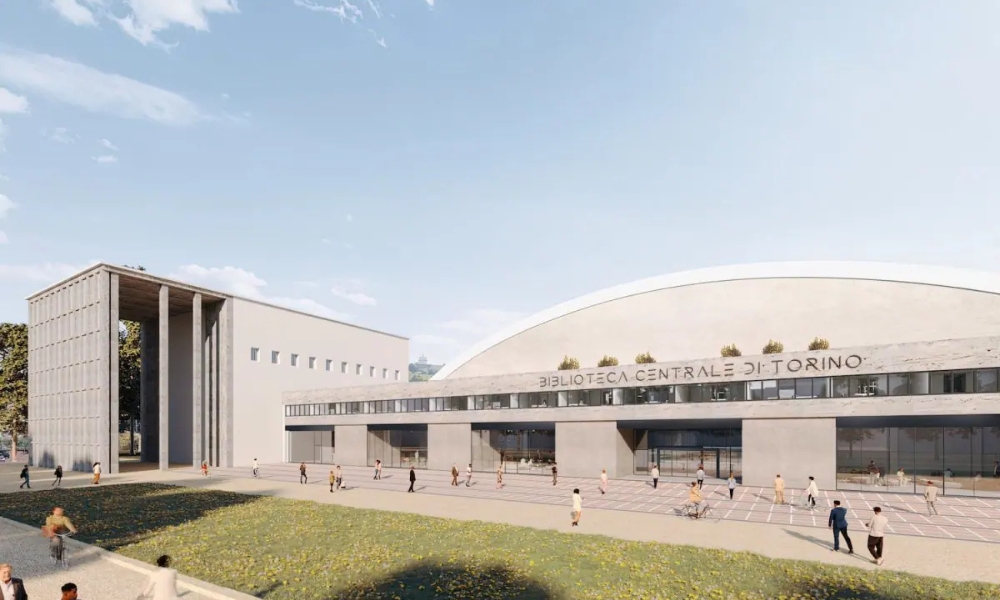
A Must-See Icon for Architectural Tours in Turin
Among the buildings most frequently requested in our professional guided tours for architects, architectural tours, and expert tours in Turin, Torino Esposizioni is second only to Palazzo del Lavoro. Its extraordinary structural innovations and layered history make it a cornerstone of any building tour in the city, attracting architects and engineers interested in 20th-century modernism and Italian structural experimentation.
A New Chapter for Torino Esposizioni
In 2026, Turin will inaugurate its new civic library inside this vast modernist complex, whose long-awaited transformation—supported by Italy’s National Recovery and Resilience Plan—will restore significance to a seminal work of architecture and engineering. Set along Parco del Valentino, the city’s historic green corridor on the River Po, the building evolved from the 1930s under Ettore Sottsass Sr. and Pier Luigi Nervi, becoming a symbol of postwar industrial identity and a major venue for fairs and public events.
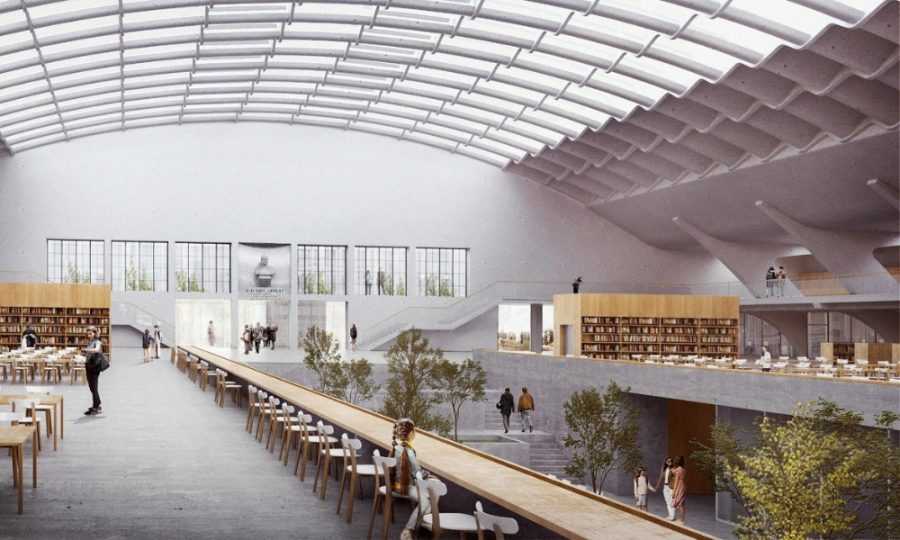
Technical and Economic Feasibility Study Render, interior view. ©Isolarchitetti/Studio Moneo
A Century of Exhibitions
The site’s exhibition legacy stretches back to the late 19th century, from the 1884 General Italian Exhibition to the 1902 International Exhibition of Modern Decorative Arts and the 1911 Exhibition of Industry and Labour. Sottsass’s Palazzo della Moda emerged in the 1930s, later heavily damaged during WWII. In 1947, Fiat and local industries commissioned Nervi, whose pioneering ferrocement structures reshaped the complex. His monumental Hall 2—95 by 110 metres—became a milestone of Italian modern engineering.
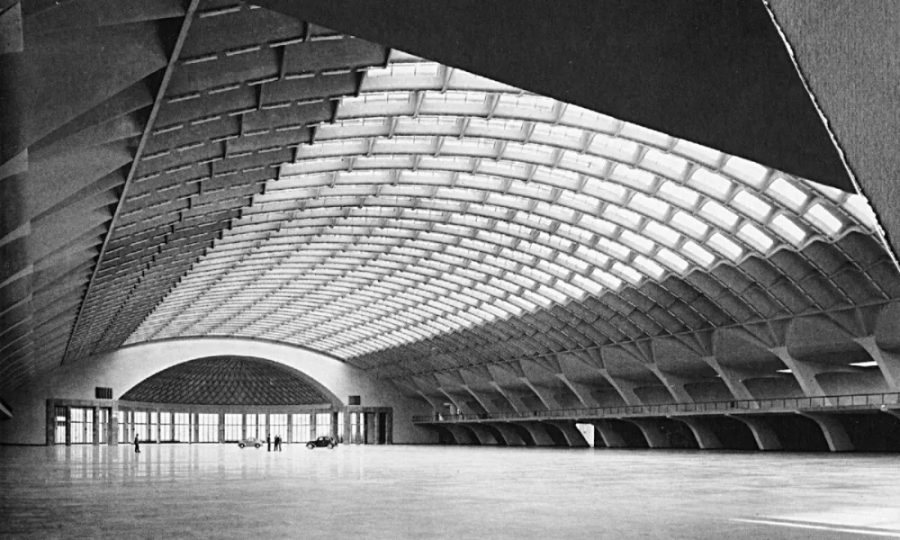
Interior of Turin Exhibition Hall in 1948. Courtesy ©Pier Luigi Nervi Foundation
Transformations and Decline
Through the 1950s, the complex expanded with the Teatro Nuovo, Nervi’s Hall 3, and Hall 5 by Riccardo Morandi. Activity continued until 1989, followed by decades of partial reuse. The 2006 Winter Olympics brought selective renovations. A decisive step forward came in 2017 with the competition won by ICIS, Rafael Moneo, and Isolarchitetti, followed by a Getty Foundation grant in 2019 for a Conservation Master Plan on the building. In 2021, the project secured €100 million for the new civic library and the regeneration of the wider ensemble.
A Project Rooted in Light and Structure
The architectural vision—advanced by ICIS, Moneo, and Isolarchitetti and executed by Cobar with ABDR—preserves Nervi’s expressive vaults while introducing new functions. A new underground level will store books; the roof structure remains visible through skylights above a vast reading hall. New walkways connect service areas, and later additions are removed to restore the purity of the original forms.
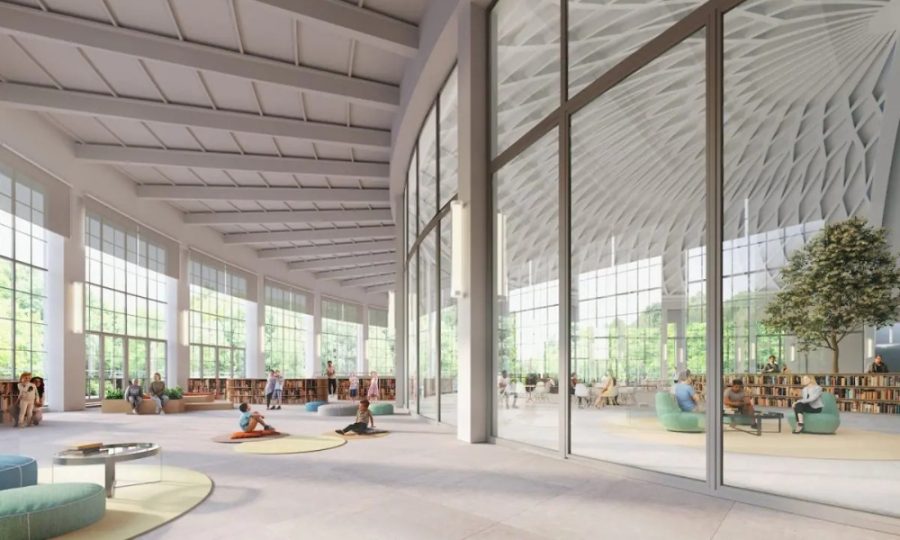
Technical and Economic Feasibility Study Render, family area in the apse. ©Isolarchitetti/Studio Moneo
A Contemporary Cultural Hub
The new civic library will offer 19,380 m² of public space, hundreds of study seats, laboratories, maker spaces, children’s areas, exhibition zones, a café, and a bookshop, complemented by over 2,300 m² of new gardens.
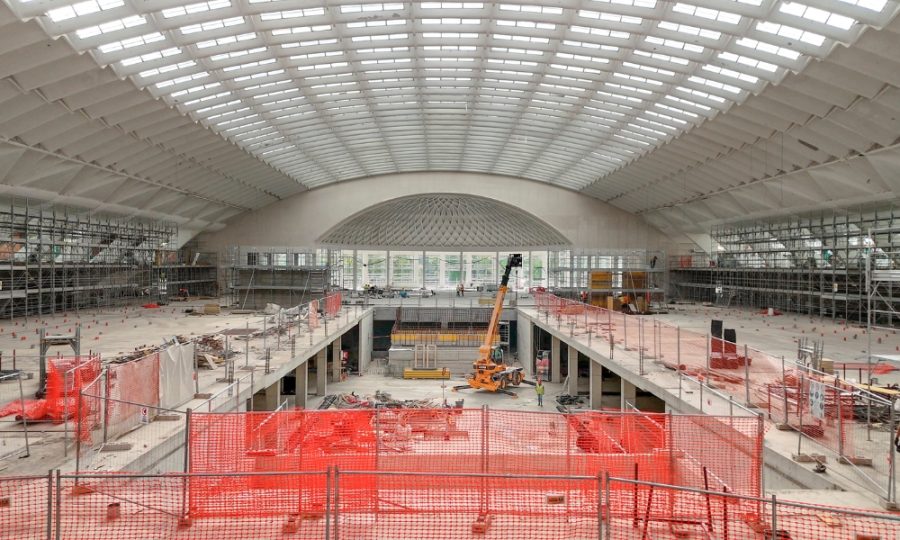
Construction site. ©Fabio Oggero. Courtesy Pier Luigi Nervi Foundation
From 2026 onward, Turin gains not only a renewed modernist landmark—now a highlight of every guided tour in the city—but also a vibrant civic hub dedicated to knowledge, culture, and public life.
Text by: Cristiana Chiorino, ComunicArch
*First image: Technical and Economic Feasibility Study Render, restored façade on Corso Massimo d’Azeglio. ©Isolarchitetti/Studio Moneo
