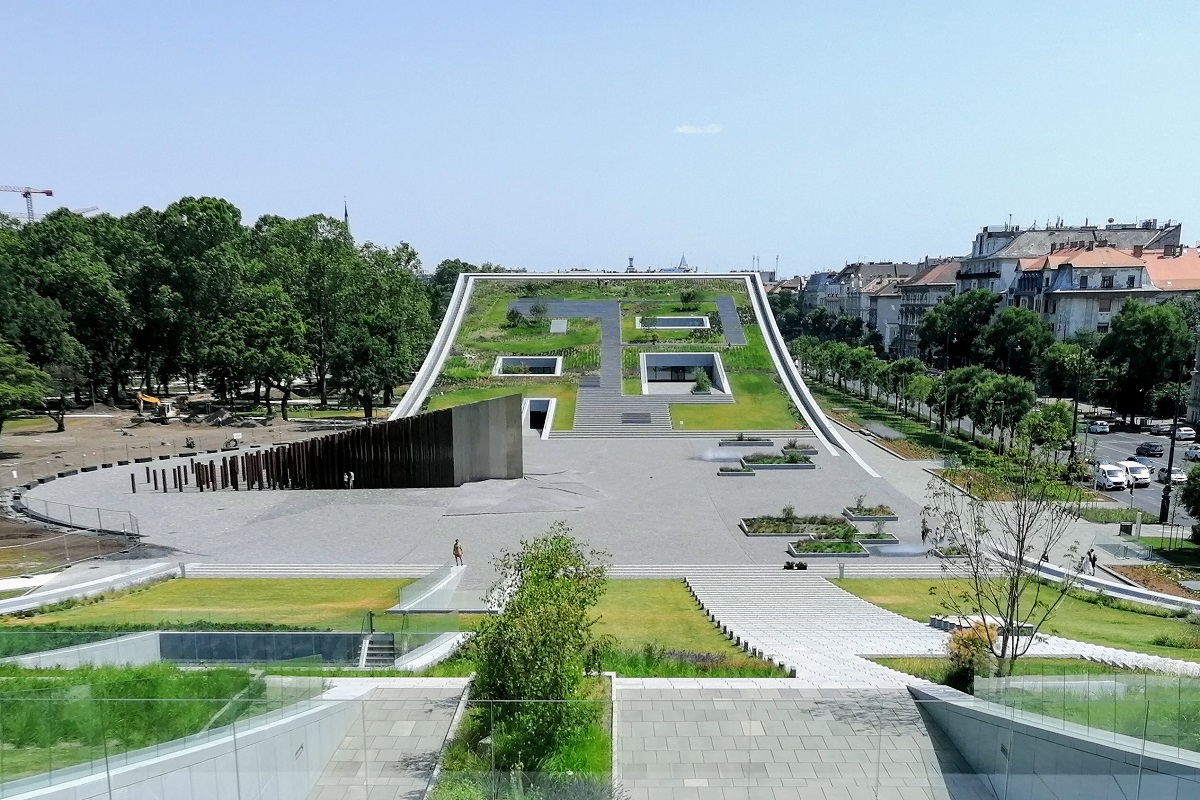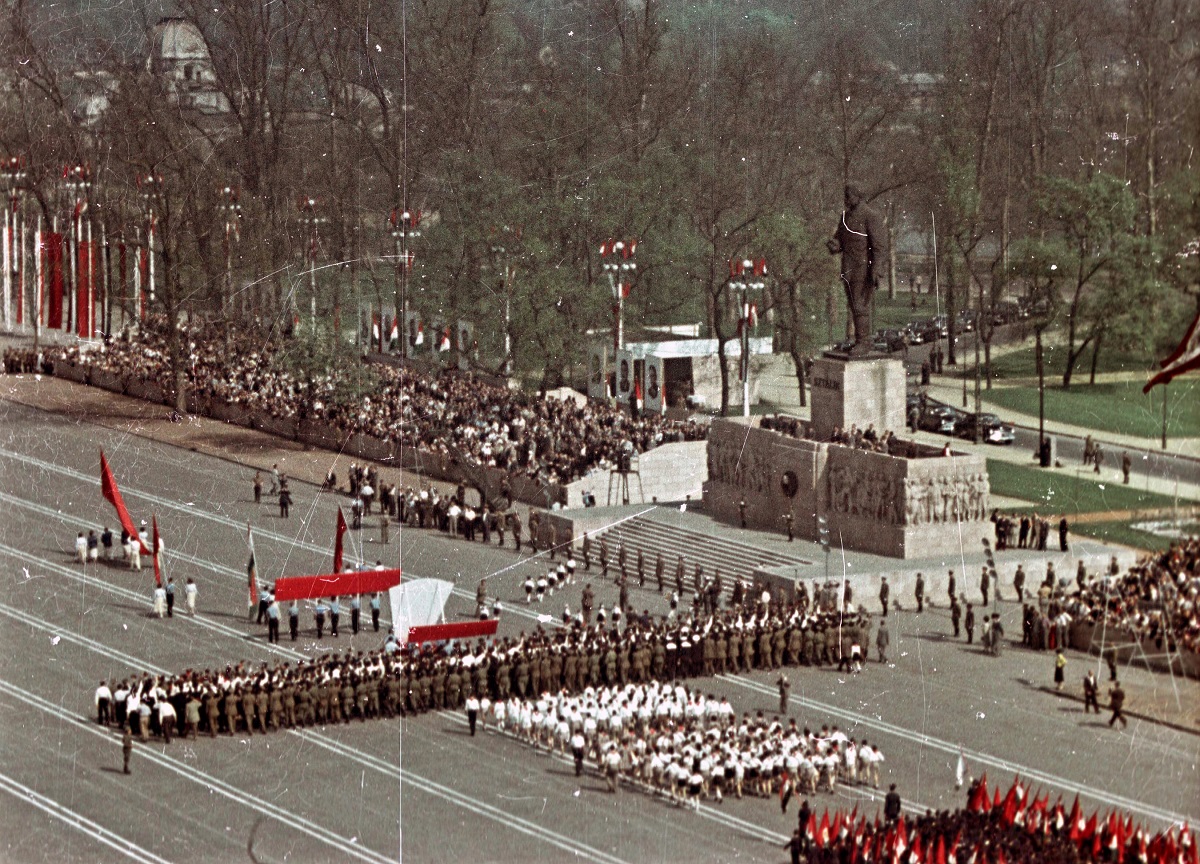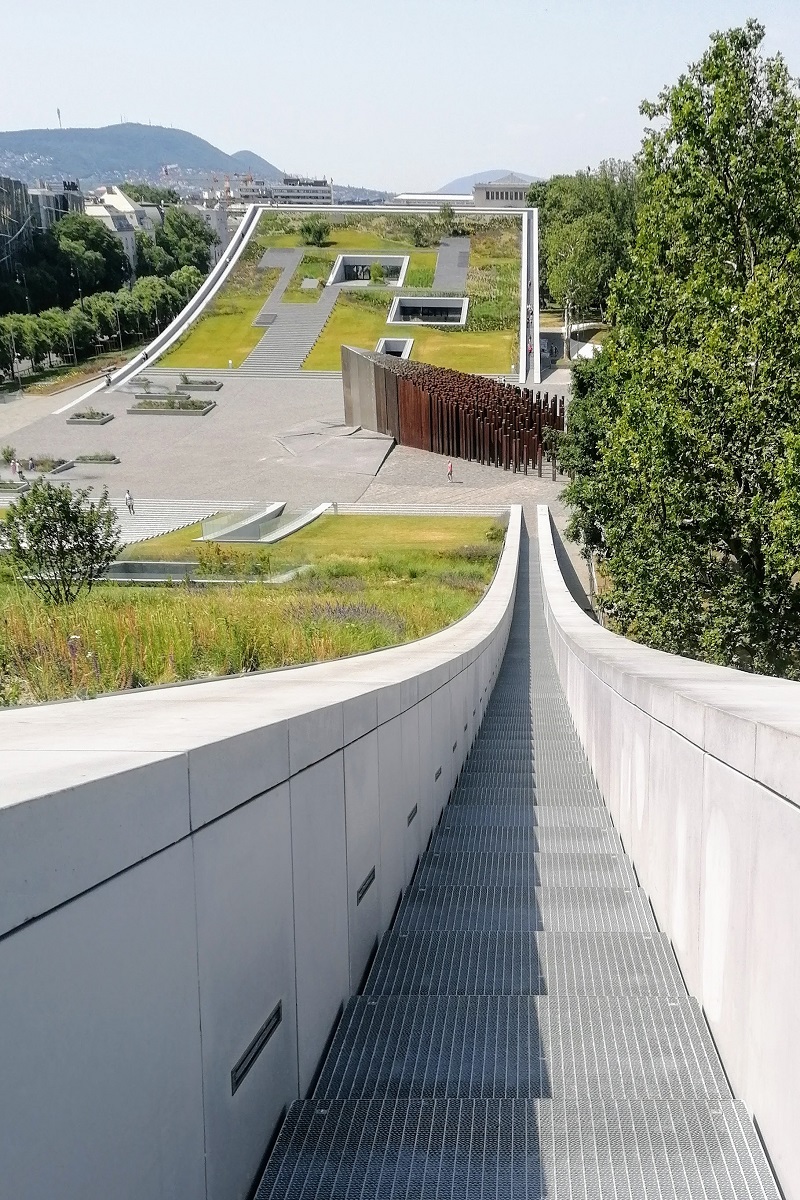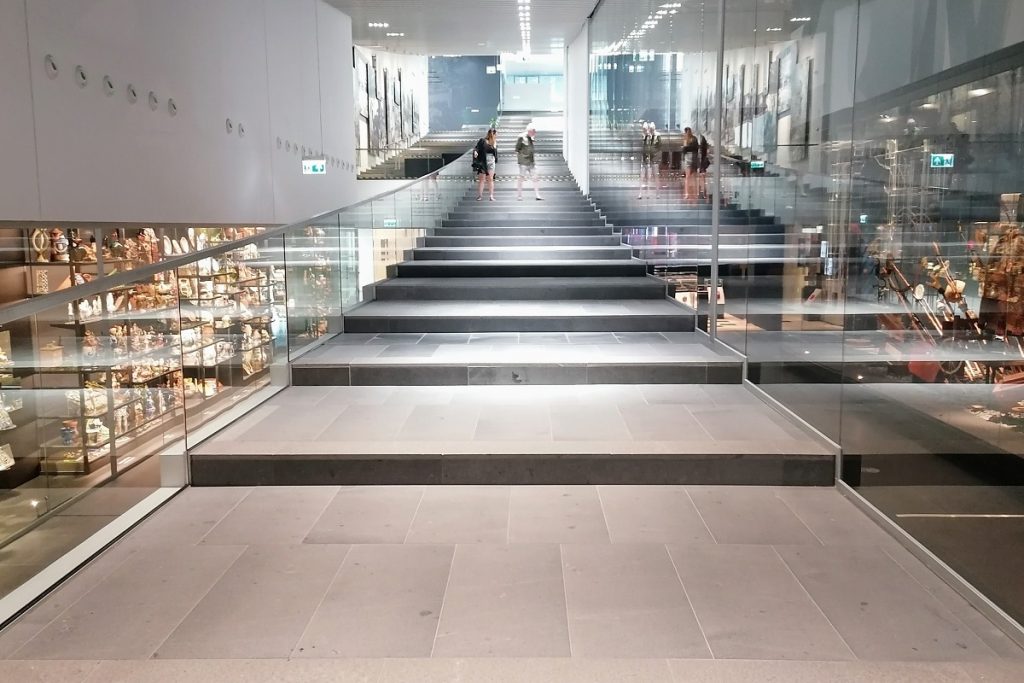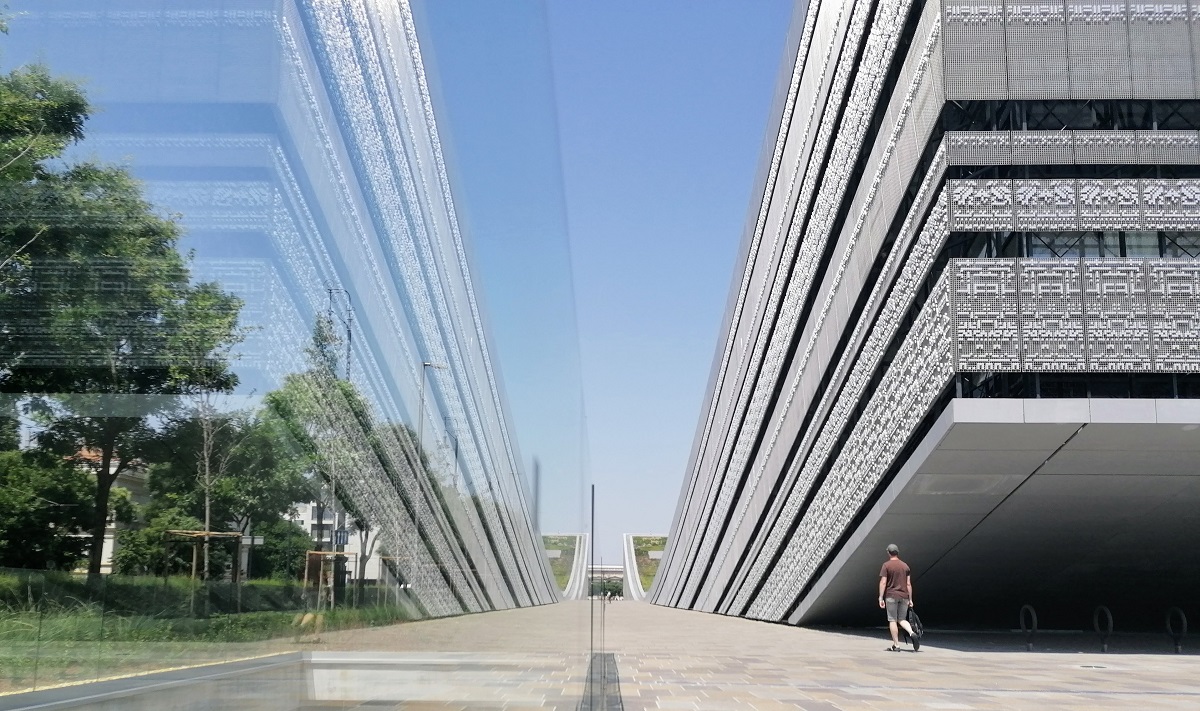
Napur architect’s Museum of Ethnography creates a new entrance situation at the Budapest City Park, but also responds to the location at the park and the history of the place.
For most people in Budapest, the way to the Liget City Park is via the famous, dead straight Andrássy Street. But it is not Andrássy Street at all, but the axis Király Street — Városligeti Avenue that is the traditional route from the medieval city centre to the over 200 years old park. Originally, the path led into the circular rondeau surrounded by three rows of trees and a small gate building that was not realised at the time.
This is exactly what the idea creators of the Liget project picked up on when they proposed two museum buildings, one for photography and one for architecture, as the end point of Városligeti Avenue to create a gateway situation. In a first competition round in 2011, two cube shaped buildings came closest to convincing the jury. After a concept modification, the Museum of Ethnography was given its location here and a second competition was held in May 2016, which was won by the Budapest based studio of Napur architect led by Marcel Ferencz. The gesture of an inverted gate motif convinced the jury the most: the historical axis finally found its worthy conclusion, equal and formally related to the semicircle of the kings at the nearby Heroes’ Square.